

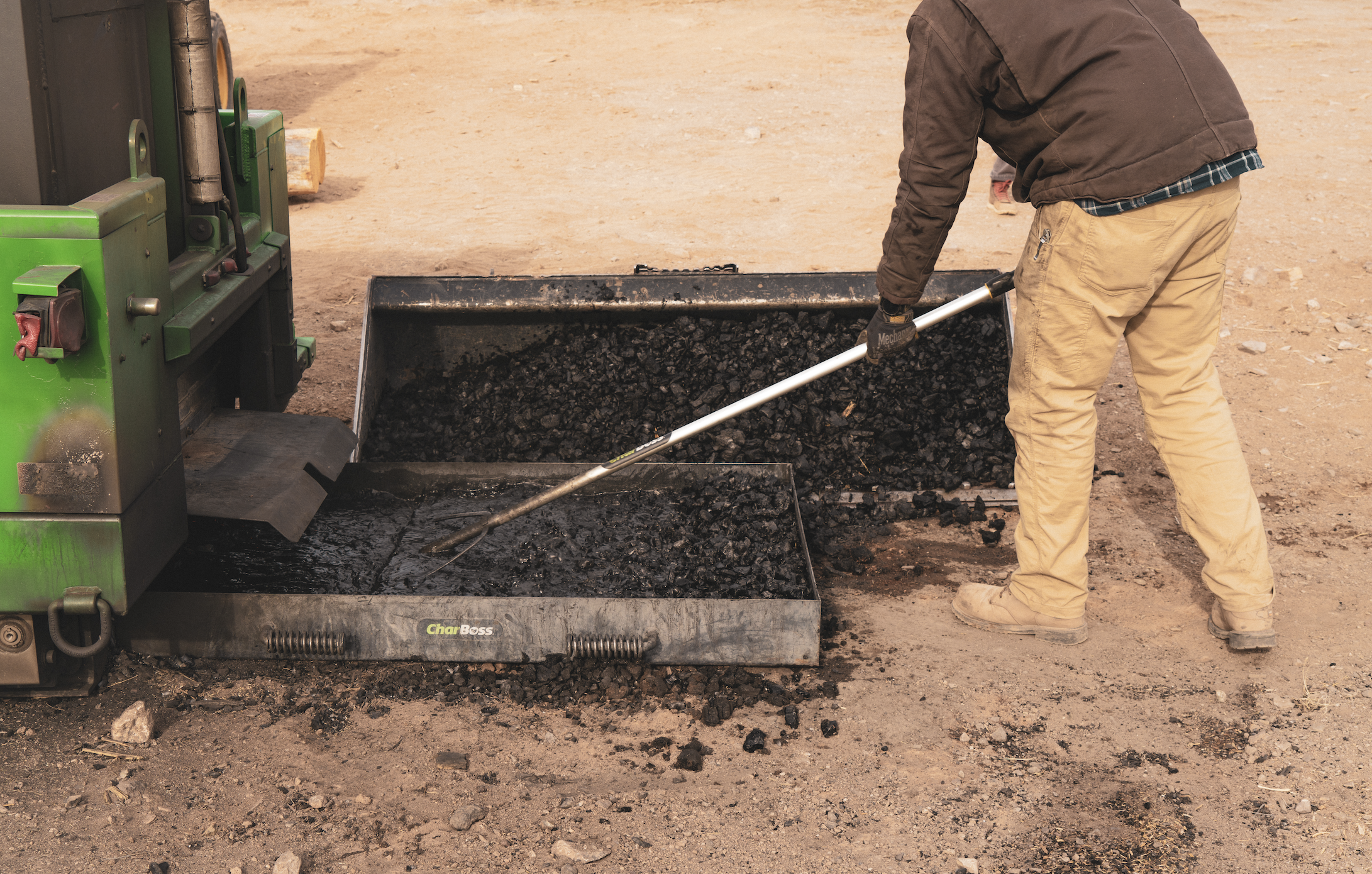
This year Secana Co. managed a biochar production pilot with Land & Carbon, Inc. and Rocky Mountain Timber Products. The idea was to turn small diameter beetle-killed spruce from the Rio Grande National Forest into biochar, then use it as a soil amendment to restore retired cropland in the San Luis Valley. Rocky Mountain Timber logged, hauled, and processed the wood. Secana Co. managed production with a mobile CharBoss air curtain burner. Land & Carbon purchased the finished biochar for a revegetation site on State Land Board property in Alamosa County.
Biochar is very porous, and its pores hold water that would otherwise drain away or evaporate. A global meta-analysis of 681 observations found that biochar raised the amount of water soil holds for plants by about 27% on average. The biggest gains were in sandy, poorly aggregated soils like many in the San Luis Valley. Biochar also helps soil particles bind into stable aggregates, which improves structure and lets water move through saturated soil instead of pooling.
The surface of biochar carries both positive and negative charges, so it binds nutrients and organic compounds that might otherwise leach away. But fresh biochar is “hungry.” Until its surfaces are filled, it can pull nutrients and carbon away from plants and soil microbes. That is why biochar is usually “activated”, or pre-loaded with compost or nutrients, before it goes in the ground.
Biochar’s pores hold the thin films of water that microbes need, and they offer shelter. Studies generally show more microbial diversity and abundance in biochar-amended soils, along with less carbon lost as CO2. Before it went out to the field, our biochar was inoculated with Dave West’s high-fungal compost made from regional materials and balanced with humic acid to bring its pH down. The plan is to spread it with a modified manure spreader and then incorporate it into the soil with a no-till air seeder, so it sits right where the native seeds are planted.
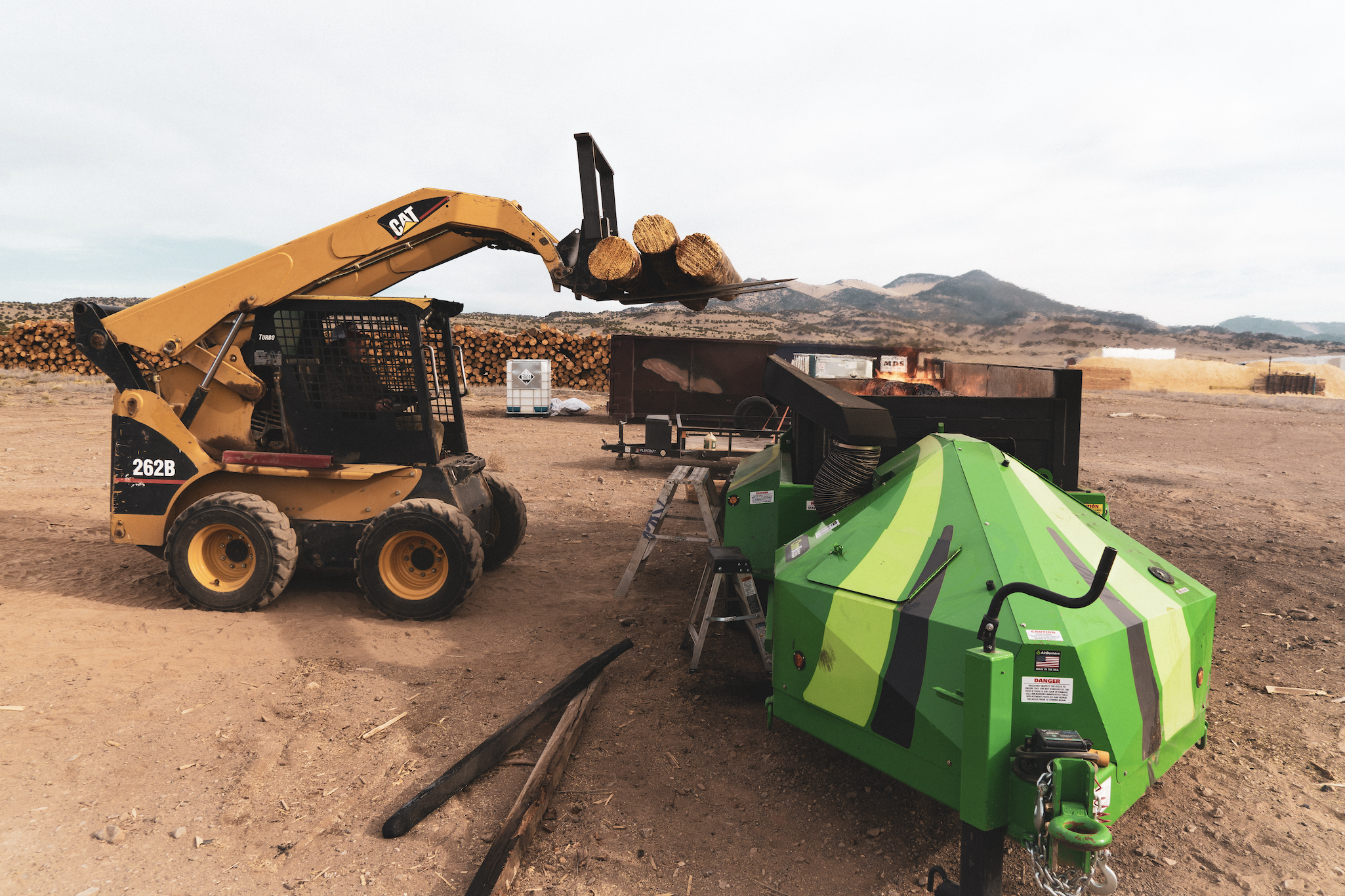
The pilot has produced 60 cubic yards toward a first-phase goal of about 180 cubic yards, enough to treat a full 120-acre field. It showed us how the supply chain works from forest to field, and exactly what has to change to scale up. Wind regularly cut production days short. Mixed wood sizes made the product inconsistent and added ash.
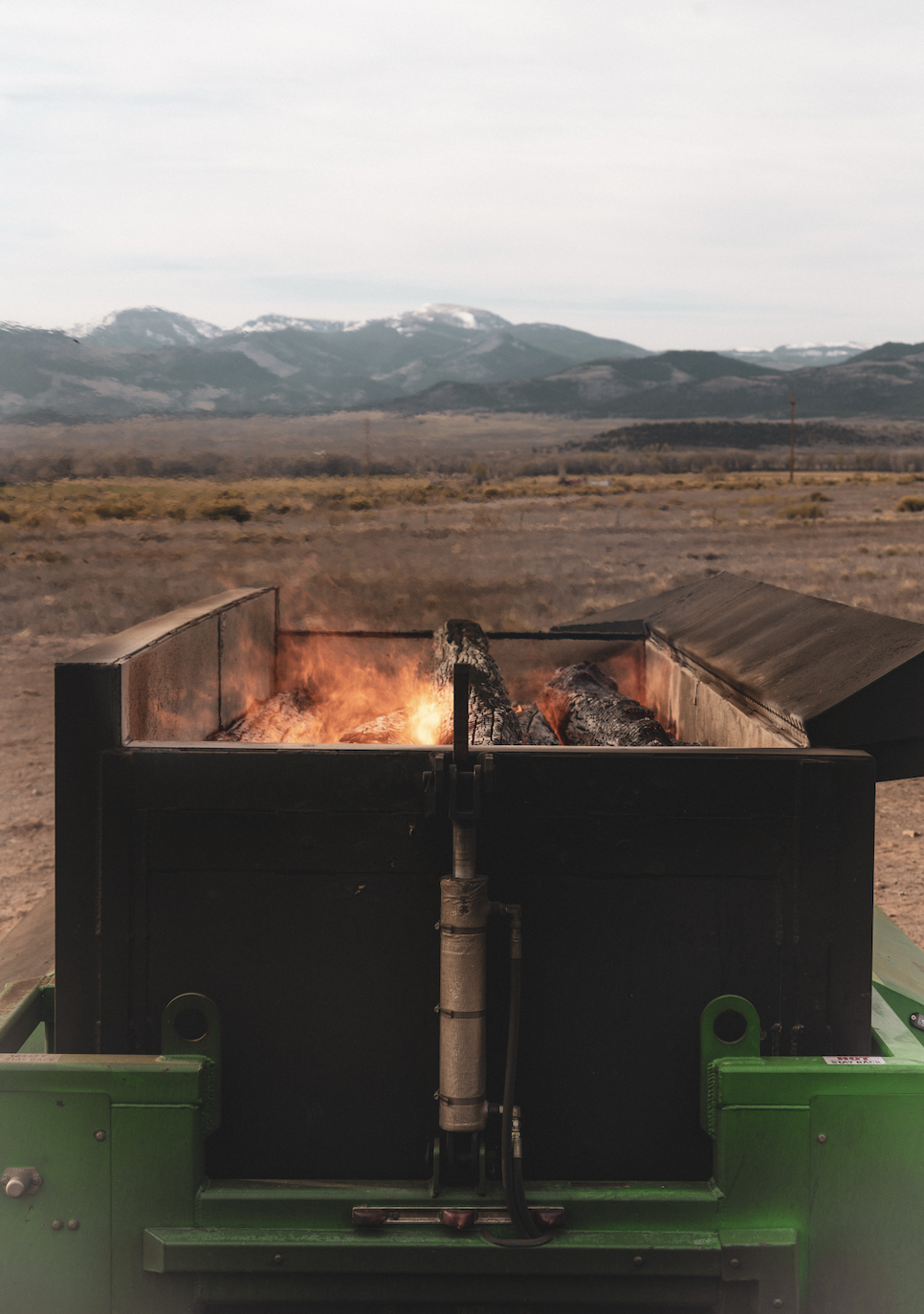
The biggest lesson was about the technology itself. An air curtain burner works with oxygen present, so it burns off some of the carbon we’re trying to keep. The air curtain also couldn’t contain stray sparks when the wind blew against it. True pyrolysis heats biomass with little or no oxygen and gives better control over temperature, which shapes how long the carbon lasts. Biochar made at higher temperatures is more stable and harder for microbes to break down, and gains in soil organic carbon have been highest with biochar produced between about 400 and 500°C. The result is a cleaner, higher-carbon product that is far better suited to carbon credit markets. Because results also vary with soil type, feedstock, and application rate, field trials like ours matter.
Another lesson learned was in regards to biochar sizing. We put whole logs and split firewood into the unit, and it produced 1-2” cuboidal chunks. These chunks will be difficult to spread and incorporate into the soil. Pre processing the wood into chips would create flaked biochar on the output, however in an air curtain burner the chips would smother so a true pyrolysis kiln would be better suited for producing an agricultural sized product.
The opportunity to scale is significant and local timber mills are desperate for alternative markets for otherwise undesirable wood products. In some parts of the Rio Grande National Forest, it is an absolute tinderbox. Old timers talk of the days where the forest was so healthy, the trees would comb the rains from the sky and they were able to graze their cattle in the high country all summer long. Now there is so much standing and fallen dead, the forests aren’t capturing and holding water like they used to. Removing this beetle-kill biomass would heal our upper watershed, and turning it into biochar would heal our soils in the lower watershed. A circular solution.
Forest Service records show roughly 400,000 tons of potential biomass tied to upcoming timber sales on the Rio Grande National Forest, much of it beetle-kill and dead or dying timber without an adequate market. On the demand side, biochar is one of the fastest growing agricultural input markets globally. Without Land and Carbon’s purchase order, this pilot would not have happened.
The Feds are slowly catching up. Congress is still negotiating a new farm bill, and both chambers’ versions include biochar. The House version’s Forestry Title would fund biochar demonstration and research projects in every Forest Service and Bureau of Land Management region. Those projects would focus on high wildfire-risk forests and draw at least half their feedstock from thinning and forest management, which describes beetle-kill salvage here almost exactly. The Senate committee version would make biochar eligible for USDA research and extension grants that study its potential to store carbon in soil. Of course, no final bill has passed yet so we will see how these provisions play out.
Loggers and mills in the Rocky Mountains have heard this same anthem from federal agencies for decades: find markets for small diameter, beetle-kill spruce. In effort to build on the findings of this pilot, Secana Co., the Wild Turkey Federation, and the 2-3-2 partnership helped Rocky Mountain Timber Products apply for a Wood Products Infrastructure Assistance grant to build a local biochar production facility on-site. The grant was not awarded, and we continue to seek funding to increase local biochar manufacturing capacity.
